
Search Suggestions
- Gold Loan
- Money Transfer
- Mutual Funds


Best Mutual Funds for SIP Investment in 2025
Whether you are just starting your investment journey or if you have been investing in mutual funds for a while now, as you approach the new financial year, it may be time to update your investment strategy to optimise your earnings. Even in 2025, the SystematicInvestment Plan (SIP) remains one of the most preferred methods for wealth building. SIPs offer a flexible and reliable investment avenue that reduces the impact of market fluctuations on your investment.
However, having a clear strategy in place, where you align your investment to your financial goals, based on your risk appetite, is always a good idea. Your investment can be aligned with various financial goals, like planning your retirement, funding your child’s education, creating an emergency fund, etc. Strategic investments in the best SIP plans can maximise benefits, yield high returns, and help you achieve your financial goals.
Table of content
- Determine Your Financial Goals
- Assess Your Risk Appetite
- Choosing the Best SIP Investment Plan
- Review Your Strategy
Here is more on how you can find the best SIP to invest in:
Determine Your Financial Goals
The first step in creating your SIP investment strategy is to determine your financial goals. Understanding what you want to achieve through SIP investments will help you identify the type of mutual fund SIP that you should choose, the ideal tenure for investment, and the amount of money you should invest on a monthly basis. Financial goals can be broadly classified into:
- Short-Term Goals: These are goals that can be achieved in a short period of time (1 to 3 years). A short-term goal can be anything, like savings for making small purchases or planning a vacation. For short-term goals, you should invest in more conservative, less volatile funds, like hybrid funds or debt funds.
- Medium-Term Goals: These are goals that may take a relatively longer period of time (3 to 7 years). Some examples of medium-term goals are funding your or your child’s or sibling’s higher education or building savings to buy a new car. For medium-term goals, you can invest in a mix of debt funds and equity funds to strike a balance between returns and risk.
- Long-Term Goals: These are goals that aim to improve your finances over time (7+ years). Saving for your retirement, creating an emergency corpus, wealth creation, etc. are all examples of long-term goals. For these types of financial goals, investing in equity mutual funds is one of the best ideas, as these funds can provide high returns over longer time durations.
Assess Your Risk Appetite
Assessing how much risk you are willing to take is a crucial step for finding the best SIP to invest in. Mutual fund SIPs are classified on the basis of their risk profile, allowing you to invest in different types of funds, ranging from conservative (low risk) to aggressive (high risk).
- Low Risk Appetite: Mutual fund SIPs like debt funds or liquid funds are low risk investment options. These types of funds are less volatile and provide stability, but they also have moderate returns.
- Moderate Risk Appetite: If your risk appetite is moderate, you should opt for hybrid or balanced funds that invest your money in a mix of debt funds and equity funds, providing both stability and growth.
- High Risk Appetite: If you are looking for high returns on your SIP investment and are comfortable with market volatility and fluctuations, equity funds are the best SIP plans for you.
If you are investing for the first time, it may be a good idea to start slow, with low-risk debt funds. It is important to remember that your risk appetite may evolve with time based on your financial situation. Apart from assessing your risk appetite, you should also consider your time horizon for the investment.
When investing in certain types of mutual fund SIPs, like equity funds, a longer time horizon is important, as the longer you stay invested, the more time your investment has to grow and generate returns.
Choosing the Best SIP Investment Plan
Choosing the right SIP for high returns requires that you consider several factors, like the type of fund, its historical performance, etc.
Planning Long-Term Growth with Equity Funds
Long-term investors who are looking for high returns on their SIP investment should ideally consider investing in equity funds. These mutual fund SIPs primarily invest in stocks that offer a lot of growth potential over time. In equity funds, you can choose from large-cap, mid-cap, and small-cap funds, based on your risk profile.
- Large-Cap Equity Funds: These funds are of well-established companies that have a strong market presence. These funds involve moderate risk and offer relatively stable returns.
- Mid-Cap Equity Funds: These funds are for investing in mid-sized companies that have a high potential for growth. These funds offer favourable returns over extended time durations and entail moderate risk (higher risk than large-cap funds).
- Small-Cap Equity Funds: These funds are for investing in small companies. Small-cap funds have the highest growth potential as well as the highest risk. These equity funds are well-suited for aggressive investors with longer time horizons.
Suggested Read: SIP Investment: What’s the Best Time to Start?
Making Conservative Investments with Debt Funds
For investors who have a lower risk appetite or who are looking for short-term investments, the SIP investment plan should focus on debt funds. Debt funds invest your money in fixed-income securities, like corporate or government bonds and money market instruments, offering lower returns as compared to equity funds. These funds are less volatile and offer more stability.
Aim for Balanced Growth with Hybrid Funds
Investors who are looking for a balance of stability and growth should consider investing in hybrid funds. These funds invest in a mix of equity funds and debt funds and offer a diversified portfolio under a single investment.
Hybrid funds involve lower risk as compared to pure equity funds, while providing moderate returns. Hybrid funds can be further categorised into aggressive (higher allocation towards equity funds), conservative (higher debt funds allocation), arbitrage (buy low in one market and sell high in another) etc.
Review Your Strategy
Once you have your investment strategy in place, you can choose the amount of money that you want to invest every month, based on your financial situation. It is also important to choose a suitable date for making SIP payments. You should choose the best date for mutual fund SIP payments based on your income schedule. Monitor the performance of your SIP investments in real time and modify your strategy, if required.
In 2025, more and more people are investing in mutual fund SIPs for a strategic approach to maximising their returns and achieving their financial goals. Whether you are looking for high returns or stability, a well-structured investment plan is important for achieving your objectives.
- Invest in Mutual Fund
- Systematic Investment Plan
- Mutual Fund Calculator
- Liquid Mutual Fund
- Debt Funds
- Balanced Funds
- Equity Linked Schemes
- Tax Saving Schemes
CATEGORIES
OUR SERVICES
-

Credit Score
-

Gold Loan
-

Personal Loan
-

Cibil Score
-

Vehicle Loan
-

Small Business Loan
-

Money Transfer
-

Insurance
-

Mutual Funds
-

SME Loan
-
Corporate Loan
-

NCD
-

PAN Card
-
NPS
-

Custom Offers
-
Digital & Cashless
-

Milligram Rewards
-

Bank Mapping
-

Housing Finance
-

#Big Business Loan
-

#Gold Loan Mela
-
#Kholiye Khushiyon Ki Tijori
-

#Gold Loan At Home
-
#Sunherisoch
RECENT POSTS

How to Change the EMI Date of Your Personal Loan Easily
Know More
How Personal Finance Helps You Achieve Your Financial Goals
Know More
Should You Take a Gold Loan When Gold Prices Are High?
Know More
NBFC vs Bank Loans: Which Offers Quicker Approval?
Know More
Why Gold Loan Demand Increases During an Economic Crisis
Know More
RBI Policy Rates Explained: What Borrowers Need to Know
Know More
डिजिटल गोल्ड कैसे खरीदें, बेचें या निवेश करें?
Know More
SIP बनाम SIF फंड: अर्थ, अंतर और सबसे बेहतर म्यूचुअल फंड विकल्प
Know More
पैन बनाम टैन: जानिए इनके मुख्य अंतर
Know More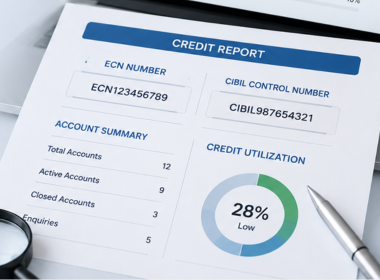
ECN नंबर और CIBIL कंट्रोल नंबर: अपने क्रेडिट स्कोर को मैनेज करने के लिए महत्वपूर्ण जानकारी
Know MoreFIN SHORTS

Is gold a safe investment during a market crash?
Know More
What is the difference between the 22K and 24K gold price today?
Know More
How often does the gold price change in a day?
Know More
What affects gold prices in India daily?
Know More
Is gold a good investment at current prices?
Know More
Should I buy gold today or wait for a price drop?
Know More
Track My Loan: Simple Steps to Check Personal Loan Status
Know More
No Salary Slip? Still Get Instant Personal Loan Online – Here’s How
Know More
Step-by-Step Guide to Gold Loan Calculation
Know More
Gold Loan Renewal Process Explained – Step-by-Step Guide
Know More
Missed Your Gold Loan EMI? Here's What Happens Next
Know More
How to Apply for Gold Loan in 2026 – Step-by-Step Guide
Know MoreRelated Posts




- South +91 99469 01212
- North 1800 313 1212