
Search Suggestions
- Gold Loan
- Money Transfer
- Mutual Funds


How to start investing in mutual funds online?
For our previous generations, investments usually meant fixed deposits, post office saving schemes, or real estate. For the more adventurous ones, they might have invested in some shares of a couple of well-known companies. But not anymore. Investors today have an incredible variety of tools, some of which were unheard of a decade ago such as MLD, Crypto Currency, REIT, Peer Peer Lending, NFT, SGB, and ETFs. The new-age investor doesn’t shy away from taking calculated risks in his investments and investing in mutual funds is a great option for them. Dedicated apps help investors make MF investments with just a click. For seasoned investors, the switch from an offline mode to an online mode of investing in mutual funds could prove to be overwhelming.
Things to Consider Before Starting Online MF Investments
Before you start investing in mutual funds online, you should know about the following:
-
Do proper research before deciding on an MF scheme, depending on your financial goals, investment horizon, and risk profile.
-
Examine the track return of the mutual fund investment. MF returns, however, shouldn’t be the only deciding factor. It is advisable to opt for a mutual fund house with large assets under management (AUM).
-
Based on your risk profile, investment objectives, age, and time horizon, your investment portfolio must have the best mutual funds from different categories.
-
Check and compare charges of different online mutual fund investment platforms.
-
Check the taxation rules of equity, debt, and balanced mutual fund schemes.
Suggested Read: How To Calculate The Returns On Mutual Funds
Modes of Online MF Investments
Companies that manage mutual funds are called Asset Management Companies or AMC. You can purchase mutual funds investment schemes via either of the following ways:
-
Directly from the AMC Website: MF investments purchased through the AMC of the particular mutual fund are called Direct Plans. The disadvantage of the mode is that you can invest in mutual funds of a particular AMC or fund house only. There are no distributor commission charges as you are buying directly from the AMC.
-
Through an Integrated Platform: An integrated online mutual fund investment platform is a single account access that helps with investing, tracking, and managing all your mutual fund investments with various AMCs. Most such AMCs have mobile applications that make investing fast, safe and convenient. These platforms are distributors for various AMCs and are paid a commission by the AMC.
Suggested Read: Types Of Mutual Funds Available In India
How to start investing in mutual funds online?
Before you start making MF purchases, make sure that your MF KYC is verified. You can complete your KYC at a KRA (KYC Registration Agency) online by filling out the KYC registration form and uploading the self-attested identity proof such as PAN Card and address proof such as Passport/Driving License/Voter ID and also a passport size photograph. You will also have to complete the IPV (In-Person Verification) by SEBI-approved agencies.
There are some common steps for online mutual fund investments via the AMC’s website or an integrated mobile app:
-
Step 1: Open a new investment account on the MF website or App.
-
Step 2: Provide personal details for the investment.
-
Step 3: Fill FATCA form.
-
Step 4: Provide bank details.
-
Step 5: Upload an image of the canceled cheque.
-
Step 6: Verify KYC through Aadhaar.
-
Step 7: Select the best-suited mutual fund for you.
-
Step 8: Choose the payment type (SIP or lump-sum) and the amount.
-
Step 9: Transfer the requisite funds from your registered bank account. Some apps may require you to credit their wallets with funds before you can invest.
-
Step 10: A folio number is generated and the purchased mutual fund is added to your investment portfolio.
Conclusion
Intelligent investors often have a separate budget to fund their investments. The minimum investment required for a mutual fund via the Systematic Investment Plan (SIP) is Rs 500. Smart investors are disciplined, patient, and consistent in their approach. Don’t be just an investor, be a smart one.
- Invest in Mutual Fund
- Systematic Investment Plan
- Mutual Fund Calculator
- Liquid Mutual Fund
- Debt Funds
- Balanced Funds
- Equity Linked Schemes
- Tax Saving Schemes
CATEGORIES
OUR SERVICES
-

Credit Score
-

Gold Loan
-

Personal Loan
-

Cibil Score
-

Vehicle Loan
-

Small Business Loan
-

Money Transfer
-

Insurance
-

Mutual Funds
-

SME Loan
-
Corporate Loan
-

NCD
-

PAN Card
-
NPS
-

Custom Offers
-
Digital & Cashless
-

Milligram Rewards
-

Bank Mapping
-

Housing Finance
-

#Big Business Loan
-

#Gold Loan Mela
-
#Kholiye Khushiyon Ki Tijori
-

#Gold Loan At Home
-
#Sunherisoch
RECENT POSTS
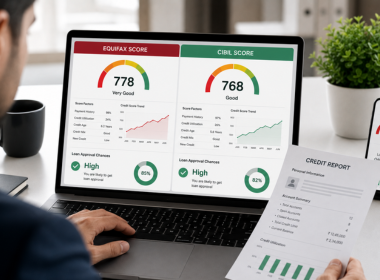
Equifax vs CIBIL: भारत में कौन-सा क्रेडिट स्कोर अधिक महत्वपूर्ण है?
Know More
मनी एक्सचेंज के लिए कौन-कौन से दस्तावेज़ आवश्यक हैं?
Know More
डिजिटल गोल्ड vs फिजिकल गोल्ड: निवेश के लिए कौन-सा विकल्प चुनें?
Know More
प्रतिज्ञा, हाइपोथिकेशन और मॉर्गेज में क्या अंतर है?
Know More
टॉप-अप लोन या फ्रेश लोन? आपको क्या चुनना चाहिए?
Know More
How to Change the EMI Date of Your Personal Loan Easily
Know More
How Personal Finance Helps You Achieve Your Financial Goals
Know More
Should You Take a Gold Loan When Gold Prices Are High?
Know More
NBFC vs Bank Loans: Which Offers Quicker Approval?
Know More
Why Gold Loan Demand Increases During an Economic Crisis
Know MoreFIN SHORTS

Can I renew or extend my gold loan after the tenure ends?
Know More
Can I get a loan against 18-karat or 14-karat gold jewelry?
Know More
Will Gold Become the Best Investment by 2030?
Know More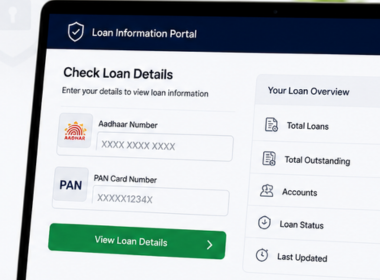
How to Check Loan Details Using Aadhaar & PAN Card?
Know More
How to Calculate Gold Loan Interest Easily?
Know More
Non-Hallmarked Gold in 2026: Is It Safe to Buy?
Know More
Is gold a safe investment during a market crash?
Know More
What is the difference between the 22K and 24K gold price today?
Know More
How often does the gold price change in a day?
Know More
What affects gold prices in India daily?
Know More
Is gold a good investment at current prices?
Know More
Should I buy gold today or wait for a price drop?
Know MoreRelated Posts





- South +91 99469 01212
- North 1800 313 1212