
Search Suggestions
- Gold Loan
- Money Transfer
- Mutual Funds


CIBIL Score vs. Credit Score - Are They the Same?
While sanctioning a loan, an individual’s creditworthiness is among the most important factors the lender takes into consideration. This is something that has a direct impact on not just the loan amount but the applicable interest rate and other borrowing terms as well.
Table of Content
- An Overview
- CIBIL Score vs. Credit Score: Key Differences
- Tips to Maintain a Good Credit/CIBIL Score
- Conclusion
Although there are several steps involved in the process of determining one’s creditworthiness, going through the credit history is undoubtedly the most important one. For this, lending institutions usually check the credit score or CIBIL score of the applicant.
These two terms (credit score and CIBIL score) are often used interchangeably, but they actually refer to two different concepts. Both of these scores allow lenders to assess an individual’s financial situation, including details about loans obtained in the past as well as existing debt obligations.
This article gives an overview of credit score and CIBIL score with a detailed explanation of how they are different from each other.
Get Your Free CIBIL Score Online
An Overview
In simple words, CIBIL and credit score are numerical representations of an individual’s creditworthiness. Both these scores are three-digit values that define one’s credit history. This score is calculated by a government-authorised credit bureau on the basis of one’s previous loans and repayment patterns. The primary difference between credit score and CIBIL score is the credit bureau that generates these scores.
In India, there are four different authorised entities that can calculate credit scores: Equifax, CRIF Highmark, CIBIL, and Experian. All these credit bureaus are licensed by the Reserve Bank of India (RBI). Credit score, as the name suggests, is a general value used for the assessment of an individual’s credit history. It can be calculated by any of these four credit bureaus.
A CIBIL score, on the other hand, is a type of credit score that has been specifically calculated by CIBIL (Credit Information Bureau (India) Limited).
Generally, these scores range from 300 to 900, where a higher score indicates better creditworthiness and a lower score is associated with a poor credit history. Since each one of these credit bureaus has its own calculation methodology and data sources, the credit scores they generate can slightly vary. However, the credit score generated by all four credit bureaus is equally valid and can be used in the same manner.
CIBIL Score vs. Credit Score: Key Differences
Here is a detailed comparison of CIBIL and credit score on the basis of several factors:
Issuing Authority
Credit score can be issued by any of the four authorised credit bureaus, including Experian, CIBIL, Equifax, and CRIF High Mark. However, the CIBIL score is only issued by the Credit Information Bureau (India) Limited (CIBIL).
Usage and Recognition
Although the credit scores generated by all four entities are equally valid, most Indian lending institutions prefer the CIBIL score.
Range
Usually, a CIBIL score can range anywhere from 300 to 900. On the other hand, the score range used by the other 3 credit bureaus is 300 to 850.
Calculation
All these credit bureaus calculate the score on the basis of information provided by multiple banks and financial institutions. This helps them to understand how many times the person has borrowed money in the past and if the repayments were made in a timely manner or not. Usually, data sources remain the same for every credit bureau, but the calculation method and algorithm can vary. As a result, there can be slight variation between the CIBIL score and the credit score generated by the other three bureaus.
Tips to Maintain a Good Credit/CIBIL Score
Here are a few simple tips that can help you maintain a good credit/CIBIL score:
- Always ensure that all your credit obligations, such as loan EMIs and credit cards, are being paid on time. Making payments after the due date can not only result in penalty charges but also affect your credit score.
- Maintaining a well-balanced credit utilisation ratio is another way to improve your credit/CIBIL score. To ensure this, always avoid using 100% of your available credit limit.
- Frequent credit applications can also impact your credit/CIBIL score negatively. So, it is best to avoid applying for new loans if you have an ongoing debt.
Suggested Read: Quick Tips for Boosting Your CIBIL Score
How to Read CIBIL Report - A Step-by-Step Process
Get Your Free CIBIL Score Online
Conclusion
There is no denying the fact that credit/CIBIL plays a pivotal role in determining an individual's creditworthiness. If you’re also planning to avail a loan and worried about your credit history, we’ve got your back!
At Muthoot Finance, we give you an option to check credit score free. Apart from this, we also offer several different kinds of loans with flexible eligibility criteria. So, you can now obtain a loan with a not-so-good credit/CIBIL score as well. For more information, either explore our loan schemes section or visit your nearest Muthoot Finance branch.
- Insurance
- Group Insurance
- Health Insurance
- Home Insurance
- Vehicle Insurance
- Life Insurance
- Travel Insurance
- Shop Insurance
CATEGORIES
OUR SERVICES
-

Credit Score
-

Gold Loan
-

Personal Loan
-

Cibil Score
-

Vehicle Loan
-

Small Business Loan
-

Money Transfer
-

Insurance
-

Mutual Funds
-

SME Loan
-
Corporate Loan
-

NCD
-

PAN Card
-
NPS
-

Custom Offers
-
Digital & Cashless
-

Milligram Rewards
-

Bank Mapping
-

Housing Finance
-

#Big Business Loan
-

#Gold Loan Mela
-
#Kholiye Khushiyon Ki Tijori
-

#Gold Loan At Home
-
#Sunherisoch
RECENT POSTS
How to Maximise Personal Loan Amount on Your Current Salary?
Know More
Why Salaried Individuals Are More Eligible for Instant Personal Loans?
Know More
What is A Good CIBIL Range Value in India?
Know More
Can You Get a Personal Loan Without a Salary Slip?
Know More
डिफॉल्ट के बाद अपना CIBIL स्कोर कैसे सुधारें: 7 बेहतरीन तरीके
Know More
सोने में निवेश कैसे करें: अपनी संपत्ति को सुरक्षित रखने के स्मार्ट तरीके
Know More
गोल्ड लोन नीलामी की प्रक्रिया क्या है?
Know More
गोल्ड लोन EMI में डिफॉल्ट हो गया है? अभी ये 5 काम करें!
Know More
कम CIBIL स्कोर पर इंस्टेंट पर्सनल लोन: अप्रूवल कैसे प्राप्त करें
Know More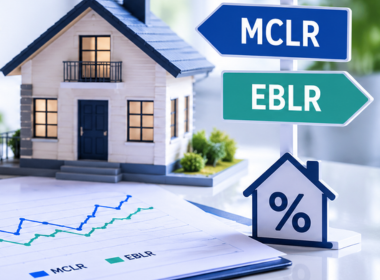
एमसीएलआर बनाम ईबीएलआर - होम लोन पर कौन अधिक बचत करता है?
Know MoreFIN SHORTS

Can I renew or extend my gold loan after the tenure ends?
Know More
Can I get a loan against 18-karat or 14-karat gold jewelry?
Know More
Will Gold Become the Best Investment by 2030?
Know More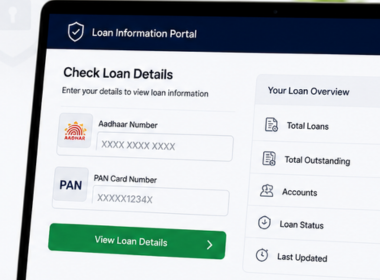
How to Check Loan Details Using Aadhaar & PAN Card?
Know More
How to Calculate Gold Loan Interest Easily?
Know More
Non-Hallmarked Gold in 2026: Is It Safe to Buy?
Know More
Is gold a safe investment during a market crash?
Know More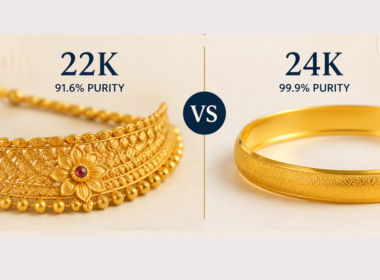
What is the difference between the 22K and 24K gold price today?
Know More
How often does the gold price change in a day?
Know More
What affects gold prices in India daily?
Know More
Is gold a good investment at current prices?
Know More
Should I buy gold today or wait for a price drop?
Know MoreRelated Posts




- South +91 99469 01212
- North 1800 313 1212