
Search Suggestions
- Gold Loan
- Money Transfer
- Mutual Funds


FD vs. PPF: Best Investment Option for Long-Term & Tax-Saving Goals
To build a secure financial future, choosing the right investment avenue is important. Among the myriad of options available in the market these days, Fixed Deposits (FDs) and the Public Provident Fund (PPF) are two popular and most trusted choices in India. When it comes to long-term wealth generation and tax saving, these investment options have always outperformed every other avenue.
Table of Content
But how to decide which one aligns with your financial goals and requirements better? FD and PPF both have different features and come with their own set of advantages. A basic FD vs. PPF comparison can help you make the right choice.
What is FD?
A fixed deposit is an investment option where you have to deposit a lump sum amount for a fixed tenure at a predetermined rate of interest. You can choose the investment amount and tenure based on your needs. The interest you earn on a fixed deposit is taxable as per your income tax slab.
FDs are known for their assured returns and easy liquidity. Their annual interest rates typically range between 6% and 8%. In most cases, senior citizens receive an additional 0.50% interest over regular rates.
What is PPF?
The Public Provident Fund is a government-backed long-term savings scheme. It was primarily designed to encourage disciplined investing and gained popularity as a retirement planning scheme. You can open a PPF account with a bank or post office and make an investment of up to ₹1.5 lakh in a financial year. The interest rate is declared by the government every quarter and compound annually.
PPF comes with a 15-year lock-in period, so you cannot withdraw your money before it reaches maturity. This investment option has an EEE tax status, which means that your investment and the applicable interest are tax-free.
Key Difference between FD and PPF
Returns Predictability
Fixed deposits allow you to invest your money, and the rate of interest is determined in the beginning. For the entire duration, this rate remains unchanged. In PPF, on the other hand, the rate of interest is revised every quarter. While FDs offer higher certainty for the short to medium term, PPF provides more consistent returns in the long run.
Liquidity
FDs give you an option to choose the duration of investment as per your convenience. The tenure of a fixed deposit typically starts from a few months and can go up to 10 years. In addition to this, FDs can be withdrawn earlier, but you might have to pay a penalty for that.
PPF accounts come with a lock-in period of 15 years, and you cannot withdraw your invested money before maturity. While liquidity is limited in this investment option, it is known to encourage financial discipline and promote regular savings.
Tax Benefits
When you invest in FDs, whatever interest you earn in a financial year is taxable as per your existing income tax slab. A few financial institutions give the option for tax-saving FDs that allows you to claim a benefit under Section 80C. But those FDs often come with a lock-in period of 5 years.
PPF, on the other hand, is known to offer better tax-saving benefits. In this option, you don’t have to pay any tax on your invested amount or the interest earned on maturity.
Suggested Read:NPS vs EPF: Everything You Need to Know About Retirement Savings
FD vs PPF: A Quick Glance
Aspect | FD | PPF |
Issuing Entity | Banks and NBFCs | Government of India |
Investment Tenure | 7 days to 10 years | 15 years |
Interest Rate | Fixed at the time of deposit | Declared quarterly |
Senior Citizen Benefit | Additional Interest rate up to 0.5% over regular interest rates. | No additional benfits |
Tax on Returns | Taxable as per slab | Fully tax-free |
Liquidity | High | Limited |
Risk Level | Low | Very low |
Ideal For | Short to medium-term goals | Long-term goals |
Suggested Read: FD vs RD: Which Investment is Right for You?
Final Thoughts
FD and PPF are two highly preferred investment options in India due to the guaranteed returns they offer. Whether you are a salaried individual, self-employed, or run a business, you can invest your money in any of these two for capital appreciation. However, there is no universal answer to the commonly asked question ‘PPF vs. FD - which is better’, as it entirely depends on your financial goals and risk appetite. Fixed deposits are better suited for short-term needs as they offer better liquidity, while PPF is more suitable for long-term goals due to their tax-free returns.
At Muthoot Finance, we offer a wide range of investment options such as mutual fund, SIP, etc., that you can choose from. For any queries, you can reach out to our team of professional finance experts. Or, visit your nearest Muthoot Finance branch to get more information.
- Invest in Mutual Fund
- Systematic Investment Plan
- Mutual Fund Calculator
- Liquid Mutual Fund
- Debt Funds
- Balanced Funds
- Equity Linked Schemes
- Tax Saving Schemes
CATEGORIES
OUR SERVICES
-

Credit Score
-

Gold Loan
-

Personal Loan
-

Cibil Score
-

Vehicle Loan
-

Small Business Loan
-

Money Transfer
-

Insurance
-

Mutual Funds
-

SME Loan
-
Corporate Loan
-

NCD
-

PAN Card
-
NPS
-

Custom Offers
-
Digital & Cashless
-

Milligram Rewards
-

Bank Mapping
-

Housing Finance
-

#Big Business Loan
-

#Gold Loan Mela
-
#Kholiye Khushiyon Ki Tijori
-

#Gold Loan At Home
-
#Sunherisoch
RECENT POSTS

How to Maximise Personal Loan Amount on Your Current Salary?
Know More
Why Salaried Individuals Are More Eligible for Instant Personal Loans?
Know More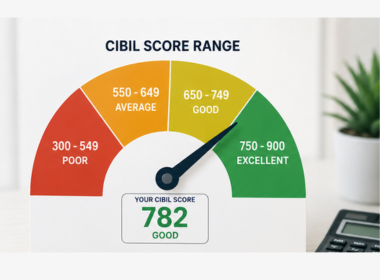
What is A Good CIBIL Range Value in India?
Know More
Can You Get a Personal Loan Without a Salary Slip?
Know More
डिफॉल्ट के बाद अपना CIBIL स्कोर कैसे सुधारें: 7 बेहतरीन तरीके
Know More
सोने में निवेश कैसे करें: अपनी संपत्ति को सुरक्षित रखने के स्मार्ट तरीके
Know More
गोल्ड लोन नीलामी की प्रक्रिया क्या है?
Know More
गोल्ड लोन EMI में डिफॉल्ट हो गया है? अभी ये 5 काम करें!
Know More
कम CIBIL स्कोर पर इंस्टेंट पर्सनल लोन: अप्रूवल कैसे प्राप्त करें
Know More
एमसीएलआर बनाम ईबीएलआर - होम लोन पर कौन अधिक बचत करता है?
Know MoreFIN SHORTS

Can I renew or extend my gold loan after the tenure ends?
Know More
Can I get a loan against 18-karat or 14-karat gold jewelry?
Know More
Will Gold Become the Best Investment by 2030?
Know More
How to Check Loan Details Using Aadhaar & PAN Card?
Know More
How to Calculate Gold Loan Interest Easily?
Know More
Non-Hallmarked Gold in 2026: Is It Safe to Buy?
Know More
Is gold a safe investment during a market crash?
Know More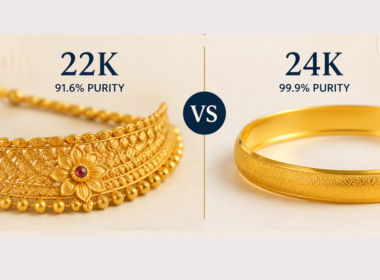
What is the difference between the 22K and 24K gold price today?
Know More
How often does the gold price change in a day?
Know More
What affects gold prices in India daily?
Know More
Is gold a good investment at current prices?
Know More
Should I buy gold today or wait for a price drop?
Know MoreRelated Posts




- South +91 99469 01212
- North 1800 313 1212