
Search Suggestions
- Gold Loan
- Money Transfer
- Mutual Funds


Does Loan Rejection Affect Your Credit Score? Here’s the Truth
A local shop owner prepares for a major festive season. Shelves are half-empty, and suppliers ask for upfront payments. Funds are needed quickly, so an application for a standard Personal loan is submitted. They need funds fast. So, they quickly apply for a standard Personal loan. A week of anxious waiting ends with a flat-out rejection letter. Concern sets in. A common question arises: has this rejection affected the overall financial standing?
Table of Content
- Decoding the Three-Digit Baseline
- The Real Impact of a "No"
- Understanding Credit Inquiries
- Busting Modern Borrowing Myths
- Smart Pivot Strategies: Protecting Your Financial Future
- Immediate Action Steps for Damage Control
- Your Next Moves
It is a terrifying thought. Out of pure anxiety, thousands of people type the exact phrase, does loan rejection affect CIBIL score, into their phones every single month. When cash flow tightens, nobody wants a damaged financial track record ruining future business plans or family goals. Making sense of these lending metrics is crucial for anyone managing daily expenses, running a small enterprise, or trying to navigate sudden cash crunches without making costly mistakes.
Decoding the Three-Digit Baseline
Before addressing rejection concerns, it is important to understand what CIBIL score means in today’s lending system. Simply put, it is a three-digit summary ranging from 300 to 900. Banks look at this numeric profile to guess if someone will repay borrowed money on time. Anything above 750 generally opens doors to favourable interest rates.
Many assume that rejection leaves a permanent negative mark on this record. However, the way credit bureaus calculate and record these numbers is far different from what most people expect.
Suggested Read: 10 Common Mistakes to Avoid When Taking a Personal Loan
The Real Impact of a "No"
Let us tackle the elephant in the room. To figure out the real answer to the worry, does loan rejection affect CIBIL score, one must separate the bank's final choice from the background check itself.
Here is the key point. Credit bureaus do not record whether a bank approved or rejected an application. A rejection letter wipes exactly zero points from a profile. It remains totally invisible to the next lender.
But there is a catch. The steps leading up to that denial do leave a trail. Whenever someone applies for unsecured funds, banks run a mandatory "hard inquiry" to dig into their financial past. Every single hard inquiry nibbles a tiny bit off the total Credit Score. If multiple applications are submitted within a short period, these repeated inquiries can reduce the Credit Score quickly. The initial denial was harmless. The panicked scramble for money caused the real damage.
Understanding Credit Inquiries
Inquiry Type | What Triggers It? | Impact on Profile | Visibility Level |
Hard Inquiry | Lenders processing an application for a Personal loan | Temporarily drops the score by a few points | Visible to all future lenders |
Soft Inquiry | Consumers checking their own report or pre-approved offers | Absolutely zero impact | Only visible to the individual consumer |
Busting Modern Borrowing Myths
Several common misconceptions continue to create unnecessary confusion for applicants. Fact-checking these myths prevents poor financial decisions:
- The Check-in Penalty: People still believe checking their own report hurts their standing. That is entirely false. It counts as a soft inquiry, meaning consumers can check it every single day without losing a fraction of a point.
- The Income Illusion: Another massive rumour is the idea that a sudden salary bump fixes a low score overnight. Bureaus do not track income at all. They only care about payment history and how much existing credit is currently maxed out.
- The Old Account Trap: Some think closing old, unused credit cards boosts their numbers. Doing this shortens the length of credit history and increases the utilization ratio, often causing the score to drop.
Smart Pivot Strategies: Protecting Your Financial Future
Banks say no for dozens of reasons that have nothing to do with bad intentions. Sometimes the debt-to-income ratio looks skewed. Other times, the applicant lacks a long employment history in their current city. Clerical errors in credit records can also lead to unexpected rejections.
For those who desperately need liquidity today, hitting a brick wall with unsecured borrowing demands a smart pivot. Firing off more applications is the worst possible move.
In such situations, asset-backed borrowing can offer a practical solution. Tapping into physical assets stops the endless cycle of hard credit checks. Gold loans, for instance, work beautifully here because the metal itself covers the risk, allowing lenders to bypass strict unsecured credit requirements.
When looking down this road, partnering with an established Financial Institution changes everything. Established institutions such as Muthoot Finance offer structured gold loan services suited for such situations. As the process is primarily based on the value of pledged gold rather than detailed credit evaluation, borrowers get the capital they need without suffering through mandatory hard inquiries. Working with a well-established financial institution also ensures secure handling of pledged assets along with quick access to funds. This strategy brilliantly shields their Credit Score for the future, keeping doors open for massive life goals like buying a house or scaling a business.
Suggested Read: 10 Tips to Improve Chances of Personal Loan Approval
Immediate Action Steps for Damage Control
If a recent application hit a dead end, smart damage control matters immensely. Consider these steps:
- Enforce a Strict Waiting Period: Give the profile three to six months to breathe and recover from that initial hard inquiry before submitting paperwork for unsecured funds again.
- Audit the Fine Print: Pull a free copy of the credit report and hunt for mistakes. Sometimes a denial happens simply because an old, paid-off account incorrectly shows up as actively defaulting. Dispute these errors immediately.
- Pivot to Secured Alternatives: If time is running out and capital is non-negotiable, step away from traditional unsecured routes. Use secured paths to bridge the gap smoothly without bruising the financial profile any further.
Your Next Moves
At the end of the day, a denial letter is totally invisible to the credit bureaus. The panic that follows, however, leaves a massive footprint. Building a strong financial profile takes time, but repeated applications over a short period can weaken it quickly.
If the current financial file looks weak, do not hit "submit" on yet another online application. Time is always ticking during emergencies, but rushing causes more harm than good. Look at the liquid assets resting idle in the locker at home. Choosing secured routes solves the immediate cash crisis while leaving long-term reputations completely spotless. Obtaining a recent credit report and evaluating available collateral can help in making an informed decision.
- Apply PAN Card Online
- Application
- Eligibility
- Documents Required Forms
- Form 49A
- Form 49AA
- Fees
- Correction & Update
- NRI PAN Card
- Tracking
- Penalty
CATEGORIES
OUR SERVICES
-

Credit Score
-

Gold Loan
-

Personal Loan
-

Cibil Score
-

Vehicle Loan
-

Small Business Loan
-

Money Transfer
-

Insurance
-

Mutual Funds
-

SME Loan
-
Corporate Loan
-

NCD
-

PAN Card
-
NPS
-

Custom Offers
-
Digital & Cashless
-

Milligram Rewards
-

Bank Mapping
-

Housing Finance
-

#Big Business Loan
-

#Gold Loan Mela
-
#Kholiye Khushiyon Ki Tijori
-

#Gold Loan At Home
-
#Sunherisoch
RECENT POSTS
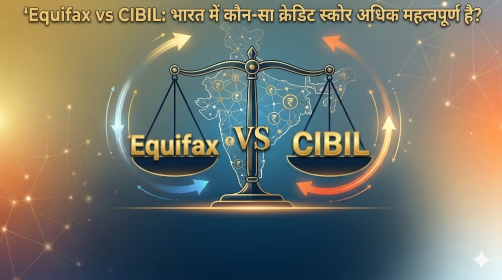
Equifax vs CIBIL: भारत में कौन-सा क्रेडिट स्कोर अधिक महत्वपूर्ण है?
Know More
मनी एक्सचेंज के लिए कौन-कौन से दस्तावेज़ आवश्यक हैं?
Know More
डिजिटल गोल्ड vs फिजिकल गोल्ड: निवेश के लिए कौन-सा विकल्प चुनें?
Know More
प्रतिज्ञा, हाइपोथिकेशन और मॉर्गेज में क्या अंतर है?
Know More
टॉप-अप लोन या फ्रेश लोन? आपको क्या चुनना चाहिए?
Know More
How to Change the EMI Date of Your Personal Loan Easily
Know More
How Personal Finance Helps You Achieve Your Financial Goals
Know More
Should You Take a Gold Loan When Gold Prices Are High?
Know More
NBFC vs Bank Loans: Which Offers Quicker Approval?
Know More
Why Gold Loan Demand Increases During an Economic Crisis
Know MoreFIN SHORTS

Is gold a safe investment during a market crash?
Know More
What is the difference between the 22K and 24K gold price today?
Know More
How often does the gold price change in a day?
Know More
What affects gold prices in India daily?
Know More
Is gold a good investment at current prices?
Know More
Should I buy gold today or wait for a price drop?
Know More
Track My Loan: Simple Steps to Check Personal Loan Status
Know More
No Salary Slip? Still Get Instant Personal Loan Online – Here’s How
Know More
Step-by-Step Guide to Gold Loan Calculation
Know More
Gold Loan Renewal Process Explained – Step-by-Step Guide
Know More
Missed Your Gold Loan EMI? Here's What Happens Next
Know More
How to Apply for Gold Loan in 2026 – Step-by-Step Guide
Know MoreRelated Posts




- South +91 99469 01212
- North 1800 313 1212