
Search Suggestions
- Gold Loan
- Money Transfer
- Mutual Funds


Understanding Two-Wheeler Loans: Everything You Need to Know
Having a mode of transport is a necessity in every household, and a two-wheeler can be a convenient option for many. On busy streets of India, a two-wheeler is a practical and efficient option with good mileage. But this doesn’t make it affordable for everyone. In such instances, getting a two-wheeler loan can be a great deal. So, let’s explore every aspect of a two-wheeler loan, how people can afford it, its benefits, and the difference between a personal loan vs. a two-wheeler loan.
Table of Content
- What Is a Two-Wheeler Loan?
- Benefits of Two-Wheeler Loan
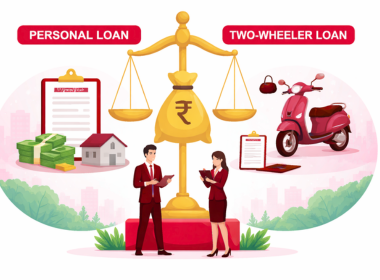
- Comparison: Personal Loan Vs Two-Wheeler Loan
- Conclusion
What Is a Two-Wheeler Loan?
A two-wheeler loan is a type of vehicle loan that helps individuals purchase a bike or scooter by borrowing money from a financial institution. These loans are designed to provide financial assistance, making it easier for buyers to afford their preferred two-wheeler. Financial institutions offer different interest rates and repayment terms, depending on factors such as the borrower's credit score, income, and loan tenure.
When considering two-wheeler finance, borrowers can choose from various banks, non-banking financial companies (NBFCs), and authorised dealerships. These lenders finance up to 90-95% of the vehicle's cost, with loan tenures ranging from 12 to 36 months.
The documentation process is relatively simple, requiring basic KYC documents, income proof, and address verification. Many lenders also offer attractive features like zero down payment options, flexible EMI plans, and quick loan disbursement to make two-wheeler finance more accessible.
Benefits of Two-Wheeler Loan
Acquiring a two-wheeler has become increasingly accessible, thanks to the availability of two-wheeler finance options. Opting for a two-wheeler loan offers numerous advantages, making it a preferred choice for many. Here are some of the benefits to consider:
Affordable Ownership
One of the primary benefits of a two-wheeler loan is the ability to own your desired vehicle without the need for full upfront payment. Lenders often provide up to 100% financing of the on-road price, allowing you to spread the cost over a flexible tenure ranging from 12 to 72 months. This structure ensures manageable Equated Monthly Instalments (EMIs), aligning with your financial capabilities.
Competitive Interest Rates
Compared to unsecured loans, such as personal loans, two-wheeler loans typically come with lower interest rates. This is because the vehicle itself serves as collateral, reducing the lender's risk. Consequently, borrowers can benefit from more attractive financing terms, making the overall cost of the loan more economical.
Minimal Documentation and Swift Processing
The bike loan process is designed to be user-friendly, with lenders requiring minimal documentation. Eligibility criteria are straightforward, and with the advent of online applications, approvals and disbursals have become quicker. This efficiency enables you to acquire your two-wheeler promptly, without unnecessary delays.
Enhanced Credit Score
Regular and timely repayment of your two-wheeler loan can positively impact your credit score. A good repayment history reflects financial discipline, which can be advantageous for future credit opportunities. Thus, a two-wheeler loan not only facilitates immediate vehicle ownership but also contributes to long-term financial health.
Comparison: Personal Loan Vs Two-Wheeler Loan
When considering financing options, it's essential to weigh the differences between a personal loan and a vehicle loan. While personal loans offer flexibility in usage, they often come with higher interest rates and do not involve collateral. In contrast, a two-wheeler loan is specifically tailored for vehicle purchase, usually offering lower interest rates since the bike serves as security.
Therefore, if your primary goal is to purchase a two-wheeler, opting for a two-wheeler loan is generally more cost-effective.
Moreover, Two-wheeler loans are more structured in their approach. These loans cover up to 90% of the vehicle's cost, with interest rates ranging from 7% to 15% per annum. The loan tenure can extend from 12 to 36 months, making monthly installments more manageable.
Additionally, the documentation process for two-wheeler loans is often simpler, as the purpose is clearly defined.
Processing time is another crucial factor to consider. Personal loans might take longer to process due to more stringent eligibility criteria and documentation requirements. Two-wheeler loans, particularly when processed through dealerships, can be approved much faster, sometimes even within a few hours.
Many vehicle manufacturers also partner with financial institutions to offer special schemes, seasonal discounts, and zero down payment options on two-wheeler loans, making them an attractive choice for vehicle purchase.
Conclusion
Moreover, some lenders offer pre-approved two-wheeler loans to existing customers with good credit history, streamlining the process even further. The foreclosure and part-payment charges are typically lower for two-wheeler loans compared to personal loans, providing more flexibility in loan management.
CATEGORIES
OUR SERVICES
-

Credit Score
-

Gold Loan
-

Personal Loan
-

Cibil Score
-

Vehicle Loan
-

Small Business Loan
-

Money Transfer
-

Insurance
-

Mutual Funds
-

SME Loan
-
Corporate Loan
-

NCD
-

PAN Card
-
NPS
-

Custom Offers
-
Digital & Cashless
-

Milligram Rewards
-

Bank Mapping
-

Housing Finance
-

#Big Business Loan
-

#Gold Loan Mela
-
#Kholiye Khushiyon Ki Tijori
-

#Gold Loan At Home
-
#Sunherisoch
RECENT POSTS
Equifax vs CIBIL: भारत में कौन-सा क्रेडिट स्कोर अधिक महत्वपूर्ण है?
Know More
मनी एक्सचेंज के लिए कौन-कौन से दस्तावेज़ आवश्यक हैं?
Know More
डिजिटल गोल्ड vs फिजिकल गोल्ड: निवेश के लिए कौन-सा विकल्प चुनें?
Know More
प्रतिज्ञा, हाइपोथिकेशन और मॉर्गेज में क्या अंतर है?
Know More
टॉप-अप लोन या फ्रेश लोन? आपको क्या चुनना चाहिए?
Know More
How to Change the EMI Date of Your Personal Loan Easily
Know More
How Personal Finance Helps You Achieve Your Financial Goals
Know More
Should You Take a Gold Loan When Gold Prices Are High?
Know More
NBFC vs Bank Loans: Which Offers Quicker Approval?
Know More
Why Gold Loan Demand Increases During an Economic Crisis
Know MoreFIN SHORTS
Can I renew or extend my gold loan after the tenure ends?
Know More
Can I get a loan against 18-karat or 14-karat gold jewelry?
Know More
Will Gold Become the Best Investment by 2030?
Know More
How to Check Loan Details Using Aadhaar & PAN Card?
Know More
How to Calculate Gold Loan Interest Easily?
Know More
Non-Hallmarked Gold in 2026: Is It Safe to Buy?
Know More
Is gold a safe investment during a market crash?
Know More
What is the difference between the 22K and 24K gold price today?
Know More
How often does the gold price change in a day?
Know More
What affects gold prices in India daily?
Know More
Is gold a good investment at current prices?
Know More
Should I buy gold today or wait for a price drop?
Know MoreRelated Posts


- South +91 99469 01212
- North 1800 313 1212